4 min readOh Natta ·
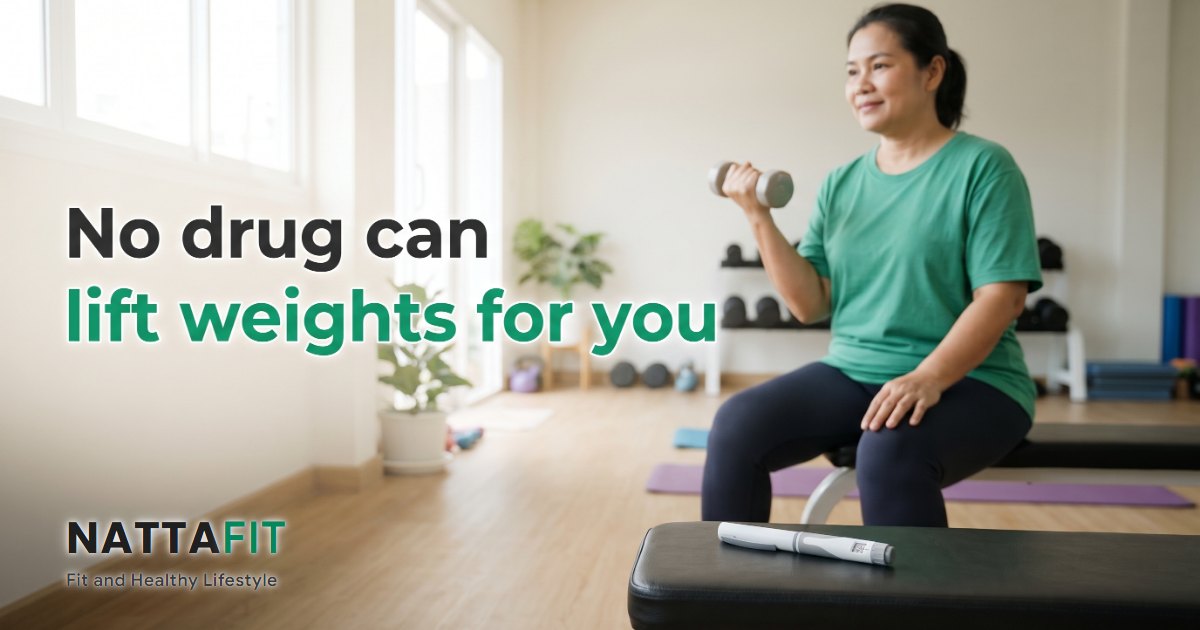
No drug can lift weights for you
In this article 5 sections
Lately I keep getting asked the same thing: "I'm on a weight-loss injection. Do I still need to exercise?" 💉
The short answer is yes. And maybe more seriously than before.
That something is muscle. 💪
🔍 The weight you lose isn't all fat
These drugs (the GLP-1 group, which most people know by their brand names) make you feel full sooner and hungry less often. A lot of people end up eating far less than before. The weight comes off, and a lot of it.
But when researchers put people in a body scanner (DXA) to see what that lost weight actually was, the answer was: not only fat.
In a large trial of one of these drugs, people lost about 21% of their body weight over roughly a year and a half. They lost about a third of their fat, and about 11% of their non-fat mass. Put simply, for every four kilos that came off, about one kilo wasn't fat. Another drug has been reported with an even higher share.
To be fair, "non-fat mass" on a scanner isn't pure muscle. It includes water, organs, and glycogen. Researchers are still arguing about how much of it is real muscle, and some studies have found muscle quality doesn't get as bad as people feared.
What nobody needs to argue about is this: when we eat a lot less, the body is always ready to let muscle go. Whether you're eating less because of a drug or because you're starving yourself, the body sees muscle as expensive to run. If you're not using it, it isn't going to keep feeding a freeloader. 😅
🎂 Why this matters more after 40
Muscle is easy to lose and hard to build back. And the older we get, the harder it is to build back.
Muscle isn't only about looking good. It's what gets you up out of a chair, carries your shopping, gets you up the stairs. It helps manage your blood sugar. And it's what keeps you from falling and getting badly hurt when you're older.
One more thing worth knowing: a study that followed people after they stopped the drug found that within a year, about two thirds of the lost weight came back. If you lost muscle along the way, there's nothing to guarantee the muscle comes back with the weight.
It's like moving house and leaving your good furniture by the side of the road. When you move back, the house fills up again, but it's not the same furniture. 🛋️
✅ So what should you do
In May 2025, four American nutrition and obesity organizations put out joint guidance for people on these drugs. The two points that are squarely my business: do resistance training, and eat enough protein, to hold on to muscle while the weight comes down.
Sounds obvious. In real life it's harder than it sounds. The drug kills your appetite, a few bites and you're full. Eat little, and you have little energy. Have little energy, and you don't feel like exercising.
For people in this situation, I focus on three things.
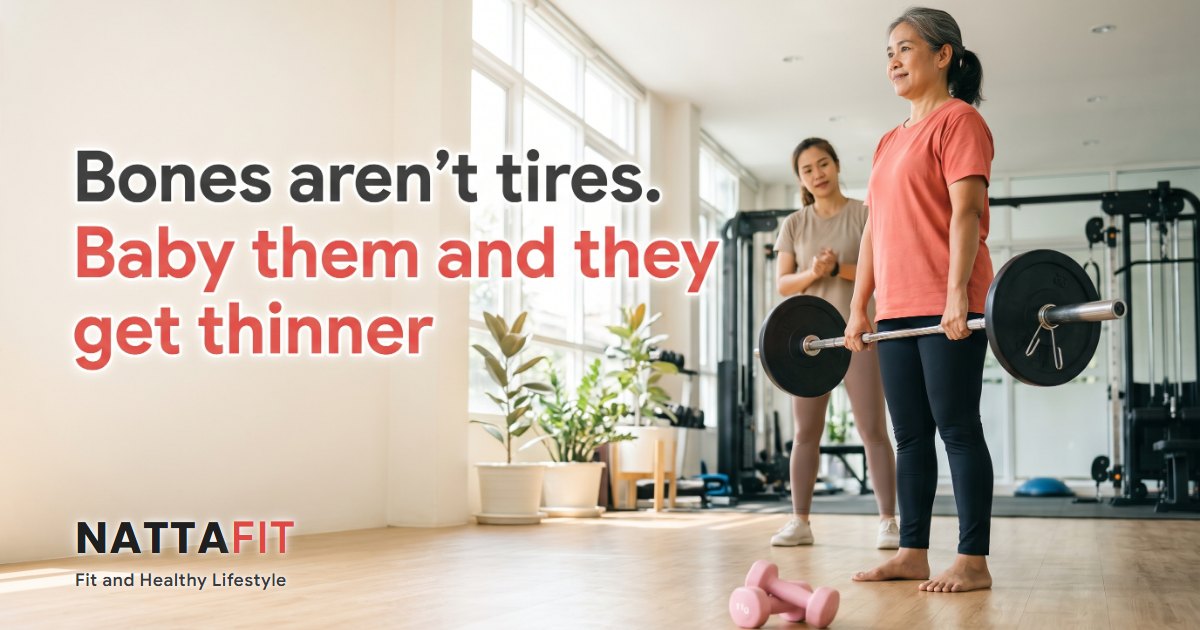
🏋️ Resistance training, so your muscles know they still have a job. Two to three days a week, mostly big moves that use lots of muscles at once, and gradually make it heavier. If you lift the same weight forever, your body sees no reason to keep the muscle.
🍗 Protein first. If you can only eat a little, you have to decide who gets the space in your stomach. I give protein a front-row seat, and everything else comes after. 🎟️
🔋 Don't train like you did when you were eating fully. If you're eating much less but still training as hard and as long as before, your body can't recover in time. You need to get the amount right. This is where watch data and post-workout notes help me a lot, to see which weeks should be lighter.
🔬 How much has research answered so far
Honestly, not everything. 🙏
There's a study that followed two hundred people who got resistance-training and protein advice from the day they started the drug. Six months in, they'd lost about 13% of their weight but only about 3% of their muscle. That number looks great. But a study like this has no comparison group, so we can't say for sure it was the training that did it.
Trials designed to answer this question directly are running now, and the results are still years away.
While we wait, I'm going with what the evidence has always pointed to: muscle that gets used and gets fed has a better chance of surviving than muscle that's left sitting there.
A drug can bring the number on the scale down. But no drug can lift weights for you. 🏋️
📚 References 6 sources
- Nutritional Priorities to Support GLP-1 Therapy for Obesity (joint guidance from ACLM, ASN, OMA, TOS, May 2025)
- Resistance Training + Protein May Lower GLP-1 RA Muscle Loss (Medscape, 2025)
- LEAN-PREP: a trial of resistance training and protein during GLP-1 treatment (ClinicalTrials.gov)
- Jastreboff AM et al. Tirzepatide Once Weekly for the Treatment of Obesity (SURMOUNT-1). N Engl J Med 2022 (DXA results are in the supplementary appendix)
- Wilding JPH et al. Weight regain and cardiometabolic effects after withdrawal of semaglutide: The STEP 1 trial extension. Diabetes Obes Metab 2022
- SEMALEAN study: effects of the drug on fat, muscle, and muscle function
This article is general information, not medical advice. If you have a health condition, are pregnant, or take medication, check with your doctor before changing how you eat or train.